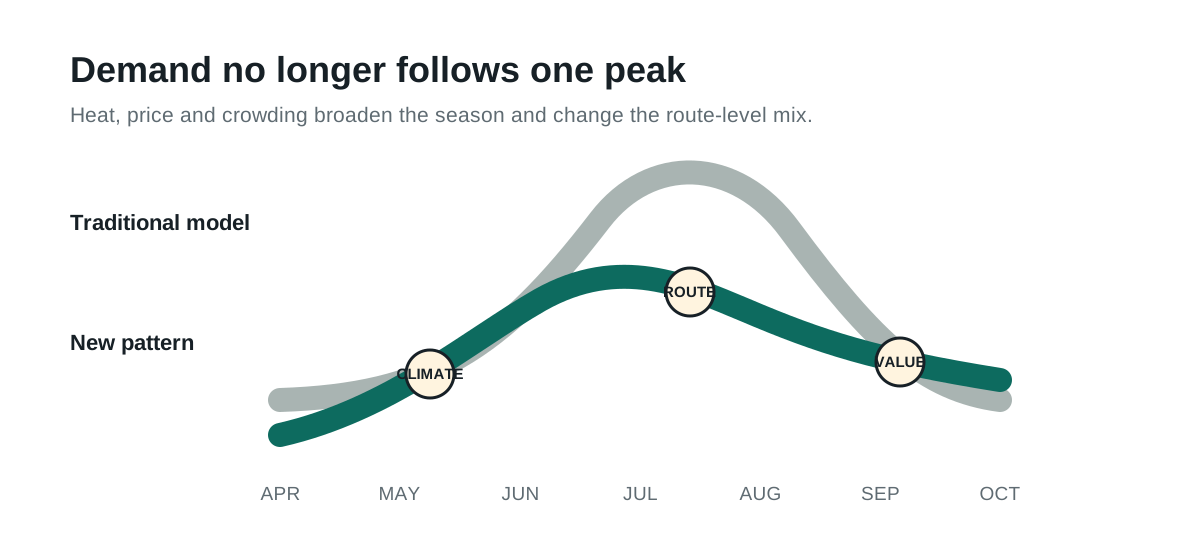
Europe’s traditional travel calendar has long been built around a predictable pattern. Demand rises in spring, peaks in July and August, and falls sharply after September. That model is starting to change.
Higher summer temperatures, more frequent heatwaves and increasing concern about overcrowding are encouraging some travelers to move their trips into spring and autumn. Others are choosing cooler destinations in Northern Europe or higher-altitude regions during the hottest months.
This does not mean that Mediterranean summer travel is in structural decline. Southern Europe remains the region’s most popular holiday destination. Instead, demand is becoming more distributed across months, destinations and types of experience.
For the travel industry, the result is a longer potential selling season. It is also a less predictable one.
From a peak season to a portfolio of seasons
Climate is becoming a more visible factor in travel decisions. Europe has warmed around twice as fast as the global average since the 1980s, making it the world’s fastest-warming continent. In June 2026, Western Europe recorded its hottest June on record, with average temperatures more than 3°C above the 1991-2020 average.
At the same time, demand for travel remains high. The European Travel Commission found that 81% of Europeans planned to travel between June and November 2026. Southern and Mediterranean Europe remained the preferred region, attracting 61% of intended travelers. However, 52% said they preferred lesser-known or off-the-beaten-path destinations. Climate, value, safety and overcrowding are increasingly influencing these choices.
The emerging pattern is therefore not a simple move away from southern destinations. It is a redistribution of demand.
Mediterranean destinations can attract more visitors during April, May, September, October and, in some locations, November. Northern European destinations can capture additional summer demand from travelers seeking moderate temperatures. Cities, rural areas and mountain destinations can build offers outside their historic peaks.
Recent performance supports this direction. International arrivals to Europe increased by 5.6% in early 2026, while overnight stays rose by 5.5%. Northern Europe reported particularly strong off-season growth, with arrivals increasing by 13% during January and February. Ireland and Finland were among the strongest-performing destinations.
The travel season is not simply moving. It is becoming broader and more fragmented.
What this means for the travel industry
A longer season can reduce the industry’s dependence on a small number of high-volume summer weeks. Hotels, airlines, airports, retailers and tourism operators may be able to use their assets for more months of the year.
This can improve revenue opportunities, support more stable employment and reduce some of the pressure created by concentrated visitor volumes. It may also allow companies to target different customer segments at different points in the year.
Families tied to school holidays will continue to travel during the traditional summer peak. Retired travelers, couples, remote workers and visitors without fixed holiday periods can travel during spring and autumn. Younger travelers may respond to lower prices, events and more flexible itineraries. Premium travelers may choose destinations based on comfort, wellness and climate rather than guaranteed heat.
However, a longer season does not automatically create predictable growth.
Demand can shift quickly in response to weather forecasts, wildfires, water restrictions, transport disruption or news coverage. A destination may experience weaker demand during an extreme heat event and stronger bookings only a few weeks later. Northern destinations may receive sudden visitor growth without having enough accommodation, transport capacity or retail infrastructure.
Companies will need to manage a longer commercial calendar and greater short-term volatility at the same time.
Travel retail needs a new planning model
Travel retail has traditionally relied on fixed seasonal calendars. Businesses plan summer ranges, staffing, promotions and stock levels months in advance, based heavily on previous-year passenger volumes.
That approach becomes less reliable when weather changes travel dates and destination choices.
Retail demand in an airport, railway station, ferry terminal or tourism district depends on more than total passenger numbers. It also depends on who is traveling, where they are going, the temperature at their destination, the length of their stay and the reason for their trip.
A passenger traveling to southern Spain in October may buy products that were previously associated with July. A traveler flying to Norway in August may need outdoor clothing, skincare, health products or equipment that does not fit the traditional summer assortment. A family facing an unexpected heatwave may prioritize hydration, sun protection and convenience. A traveler taking an autumn city break may spend more on food, gifts and cultural experiences.
Travel retailers therefore need to move from a fixed seasonal model to a demand-sensing model. Decisions should combine booking data, passenger forecasts, weather information, route schedules, events, customer profiles and live sales performance.
Opportunities for FMCG companies
For FMCG brands, the longer season creates an opportunity to extend the commercial life of products that were previously concentrated in summer.
Hydration, sun protection, skincare, personal care and health products can remain relevant later into the year in southern European locations. Brands can also develop products for heat-related needs, including electrolyte drinks, cooling products, portable formats and travel-sized wellness items.
Assortments should vary by route and destination rather than following one European calendar. The right product mix for a passenger traveling to Iceland will be different from the mix for someone traveling to Greece, even when both depart from the same airport.
Food and beverage companies can adapt pack sizes and formats to shorter trips, late departures and multi-stage journeys. Products designed for immediate consumption, portability and temperature resilience may gain importance.
There is also an opportunity to connect products with local destinations. As travelers explore lesser-known regions and travel outside the summer peak, demand for regional food, gifts and limited-edition products can expand across more months.
The main challenge will be inventory management. Brands and retailers must avoid simply extending summer stock across the whole year. They need more precise forecasts at the level of location, route, week and traveler segment.
Opportunities for service companies
Companies providing payments, insurance, mobility, logistics and passenger services can benefit from the increased complexity of travel.
Travel insurance providers can introduce products that respond more clearly to extreme heat, wildfire disruption, transport delays and destination changes. Assistance services can give travelers real-time guidance when conditions affect an itinerary.
Payment providers can help retailers identify changes in spending by origin, destination, time of day and traveler profile. Flexible payment products may also support bookings during the shoulder season, particularly as travelers become more sensitive to price.
Mobility companies can build services around a less concentrated travel calendar. Demand for airport transfers, car rental, rail connections and local transport may continue later into autumn and begin earlier in spring. Operators will need flexible capacity rather than one large summer increase.
Staffing and logistics providers can also offer more adaptive models. Instead of recruiting for one short peak, travel businesses may need smaller increases across several periods, supported by demand forecasts and flexible scheduling.
Opportunities for technology companies
Technology providers can help travel retailers understand and respond to demand that moves across time and place.
Weather-aware forecasting is one of the most immediate opportunities. Sales and passenger data can be connected with temperature forecasts, flight schedules, destination conditions, public holidays and major events. This can improve decisions on stock, staffing, product placement and promotions.
Digital signage and retail media can also become more responsive. Content shown at an airport can change according to the destinations departing from a particular gate, local weather conditions and the expected passenger mix.
Customer platforms can recommend products and services based on the journey rather than only the customer’s past purchases. A traveler going to a hot destination may receive a relevant hydration or skincare offer. Someone traveling to a cooler region may see outdoor products, transport options or experience packages.
Technology can also support energy management. Shops, hotels, lounges and terminals will face higher cooling needs during heat events. Systems that forecast demand and control energy use can reduce costs while protecting customer comfort.
Opportunities for airlines, hotels and other travel businesses
Airlines and tour operators can use a broader season to extend selected routes, increase shoulder-season capacity and create new packages around culture, food, nature and events.
Hotels can develop different value propositions for each part of the year. Summer offers may focus on leisure and family travel. Spring and autumn can target couples, active travelers, remote workers and older customers. Pricing, food, entertainment and wellness services should reflect these differences.
Airports and other transport hubs can treat shoulder-season growth as a commercial opportunity rather than a smaller version of summer. Passenger profiles and spending patterns may differ significantly. Retail space, promotions and services should change accordingly.
Destination organizations can use data to direct travelers toward regions that have available capacity. This can support local economic development while reducing pressure on crowded cities and coastal areas.
The strongest results will come from coordination. A new airline route or extended hotel season will create more value when retailers, transport providers, local businesses and destination marketers plan around the same demand opportunity.
How AI can turn a longer season into profitable growth
The strategic opportunity is clear. The execution is more difficult.
Most travel companies hold large volumes of information across sales systems, loyalty platforms, bookings, weather feeds, operations and customer service. These data sources are often fragmented. Teams may produce reports, but still lack a reliable view of what will happen at a specific location next week.
An AI services partner can help companies convert this information into practical decisions.
At Marksyte, we support travel and travel retail businesses in five main areas.
First, we build demand-forecasting models that combine historical performance with weather, routes, bookings, events and passenger data. These models can forecast demand by store, product category, destination and time period.
Second, we support assortment, pricing and promotion decisions. AI can identify which products should be available at each location, when promotions should start and which offers are most relevant to different traveler groups.
Third, we create customer-facing AI tools. These can include digital travel assistants, personalized recommendations, multilingual service agents and systems that help travelers respond to disruption.
Fourth, we improve operational planning. AI can support workforce scheduling, stock replenishment, logistics, energy management and scenario planning during extreme weather events.
Fifth, we help companies build the data foundations and governance needed to use AI responsibly. This includes data quality, model monitoring, privacy controls, human oversight and clear measurement of commercial results.
The aim is not to automate every decision. It is to give teams a faster and more accurate view of demand, so they can act before conditions change.
A longer season, but not an easier one
The extension of Europe’s travel season offers a significant growth opportunity. It can create new selling periods, increase asset use and bring visitors to a wider range of destinations.
It also weakens some of the assumptions on which travel businesses have planned for decades.
Annual summer campaigns, fixed assortments and historic averages will not be enough. Companies will need to read demand more frequently, plan at a more detailed level and respond to weather and traveler behavior in near real time.
For FMCG brands, service providers, technology companies and travel businesses, the advantage will come from treating seasonality as a dynamic commercial variable rather than a fixed calendar.
Europe’s travel season is becoming longer. The businesses that understand how, where and why it is changing will be best placed to capture the value.